National Day for Truth and Reconciliation
September 30 marks the National Day for Truth and Reconciliation and Orange Shirt Day. Today, the Royal Winnipeg Ballet honours Survivors of residential schools and recognizes the strength, resilience and contributions of First Nations, Inuit and Métis Peoples.
Continuing the Work
September 30 marks the National Day for Truth and Reconciliation and Orange Shirt Day. Today, the Royal Winnipeg Ballet honours Survivors of residential schools and recognizes the strength, resilience and contributions of First Nations, Inuit and Métis Peoples.
We recognize that our presence on the lands of the Anishinaabeg, Ininew, Anisininew, Dakota and Dene Peoples, and the National Homeland of the Red River Métis — as well as on the many Indigenous lands and territories where we travel — carries with it a responsibility to advance truth and reconciliation through our actions, relationships and ongoing learning.
Today, we encourage our community to take time to engage with Indigenous voices, perspectives and histories through reading and listening, attending a community event, or learning more about the histories of the lands on which we live, work and gather. We are also sharing resources with RWB staff to support continued learning and reflection today and beyond.
For RWB, that learning also happens through the relationships we build with Indigenous artists and communities.
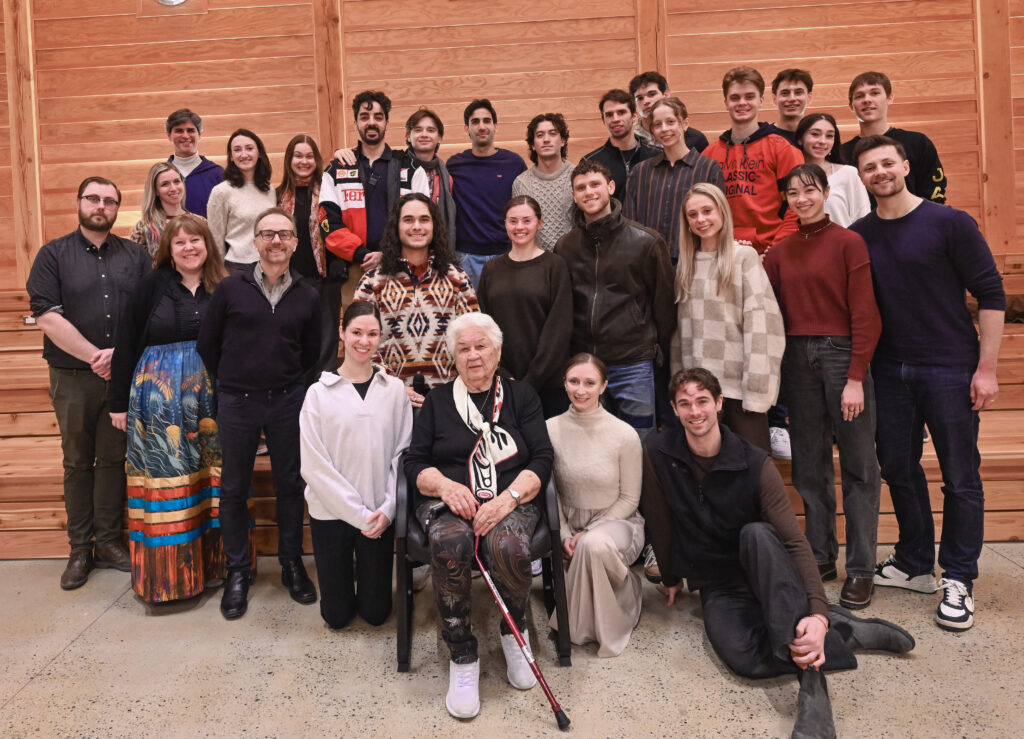
Earlier this year, to begin our West Coast tour of Cameron sinkʷə Fraser-Monroe’s T’əl: The Wild Man of the Woodsin a good way, we started in Tla’amin Nation, Cameron’s home community and the place whose stories are at the heart of the work. Rooted in Tla’amin oral history, T’əl features narration by Tla’amin Knowledge Keeper Elsie Paul in English and ʔayʔaǰuθəm, with costumes by Asa Benally and an original score by the late Cris Derksen.
During the visit, our dancers and production team had the privilege of spending time with Elsie and other members of the Tla’amin community. It was an opportunity to listen and learn, and to deepen our understanding of the community, culture and relationships from which T’əl emerged. Beginning the tour in Tla’amin Nation brought the work back to the place and people at the heart of its story and was an important part of our ongoing relationship-building and learning.
Experiences like this remind us that meaningful relationships are built over time. Across RWB, we continue to work with Indigenous advisors, artists and community members to examine our organizational practices, strengthen relationships and create opportunities for learning throughout the organization.
Reconciliation cannot be addressed through a single performance, initiative or day of recognition. It requires sustained attention, accountability and action.
We invite you to learn more about RWB’s ongoing reconciliation commitments at rwb.org/reconciliation.
Photo credit: Davis McKenzie, Tla’amin Nation